Project Overview: APAS provided a modular aluminum-profile safety fencing solution for automated production areas at the Jinan BYD Phase III project. The installed safety fencing uses aluminum-profile frames and transparent panels to create physical boundaries around robotic equipment and automated production areas, while maintaining clear visibility of the equipment and working areas inside the fenced zones.
Site Conditions: Multiple robotic units and automated equipment are arranged within the production area, requiring clearly defined physical boundaries around the operating equipment.
Solution: APAS configured a modular aluminum-profile safety fence with transparent panels around the robotic work area. Safety doors and access sections are incorporated into the fence layout, providing controlled access while keeping the robotic equipment visible from the surrounding production area.
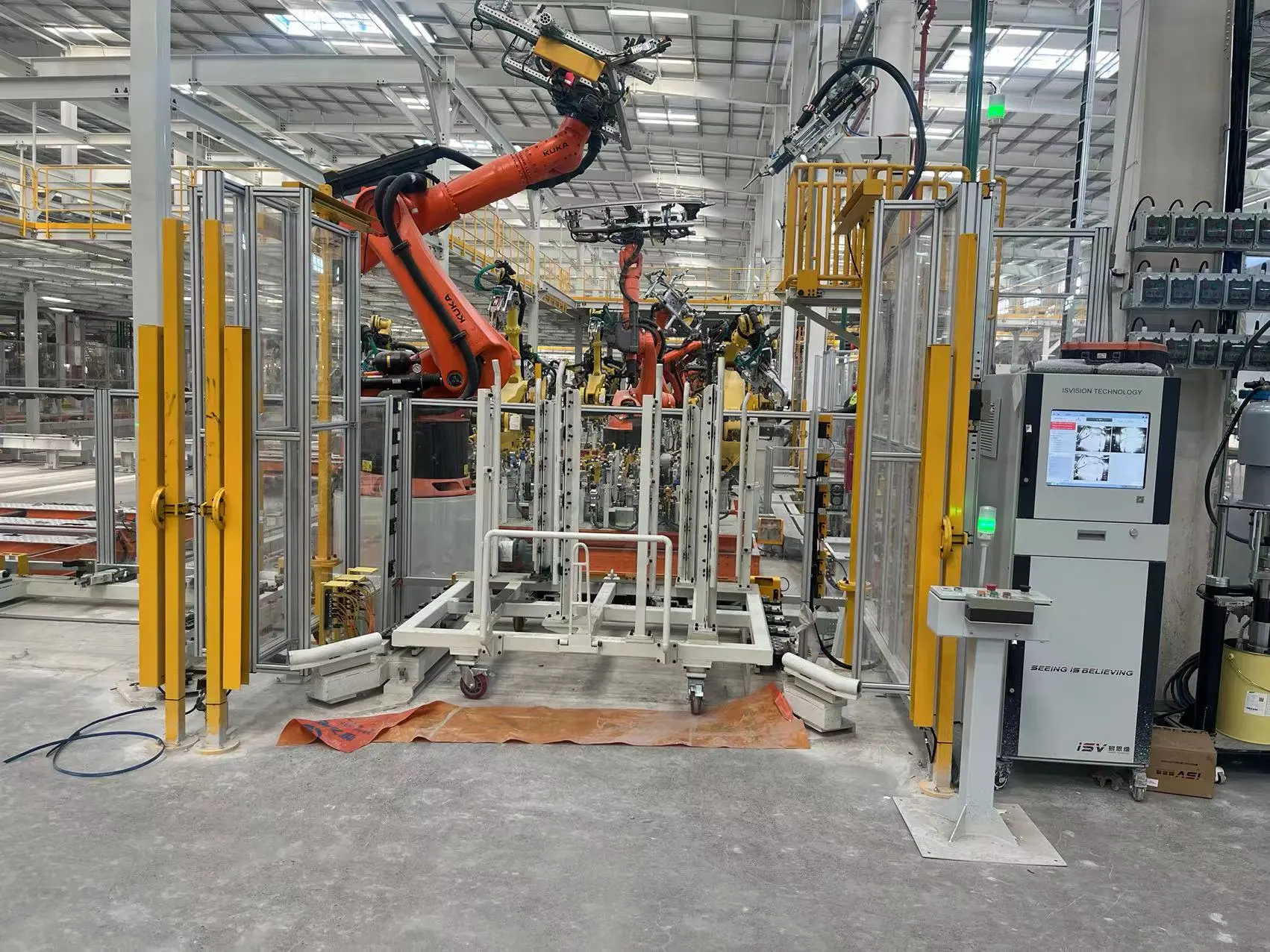
Site Conditions: Automated equipment and production fixtures are arranged across the workshop floor, with different operating areas requiring defined physical boundaries and access sections.
Solution: The safety fencing is assembled from modular aluminum-profile frames and transparent panels to form separate sections around the automated production equipment. The fence layout includes access doors and safety components while maintaining visibility of the equipment and production area.
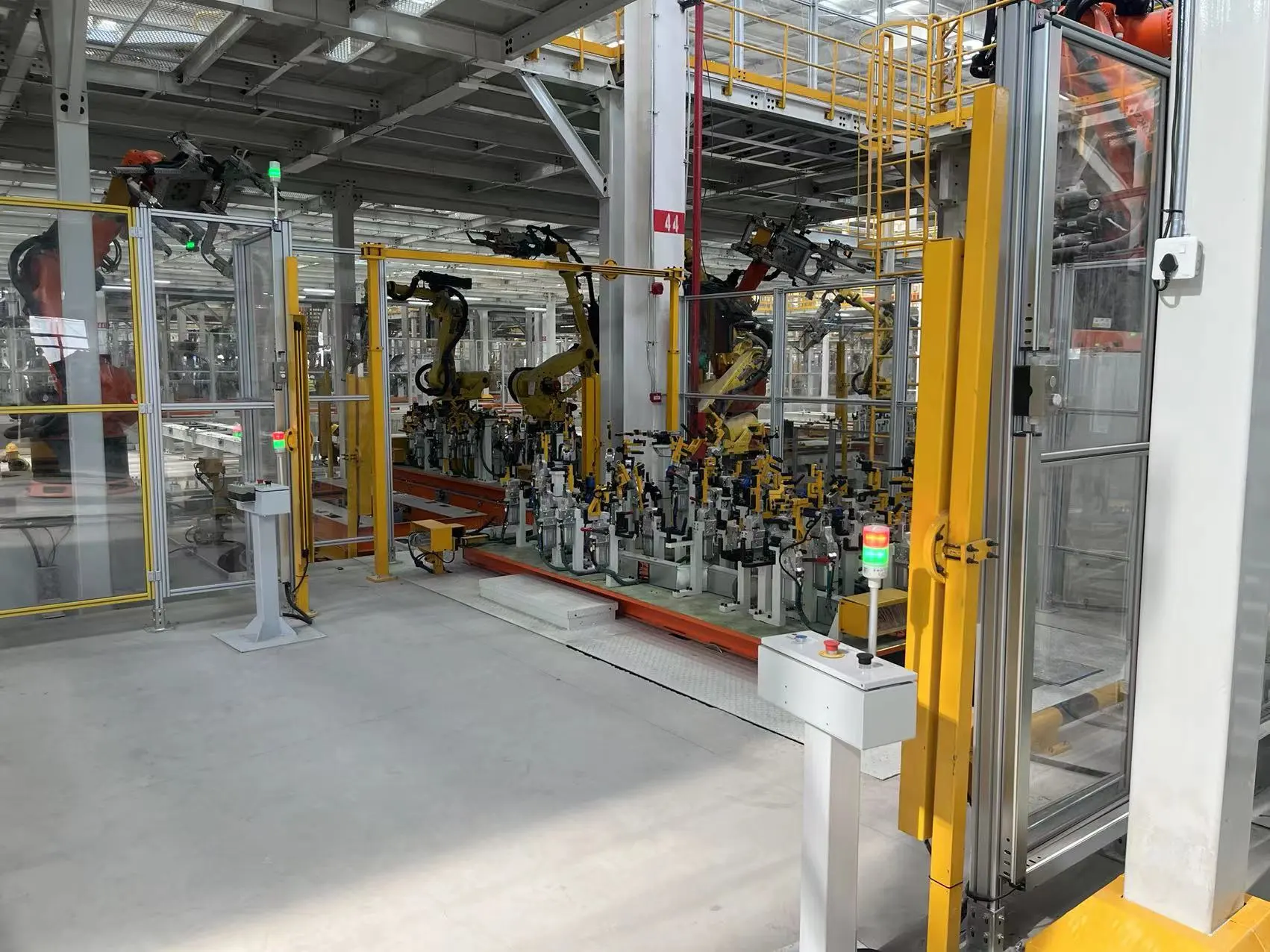
Site Conditions: A continuous automated production area extends across the workshop, with multiple robotic units and production equipment positioned along the line.
Solution: APAS configured an extended modular safety fence along the production area using aluminum-profile frames and transparent panels. The continuous fence structure creates a clear physical boundary around the automated equipment while allowing the production line to remain visible from the surrounding workshop space.
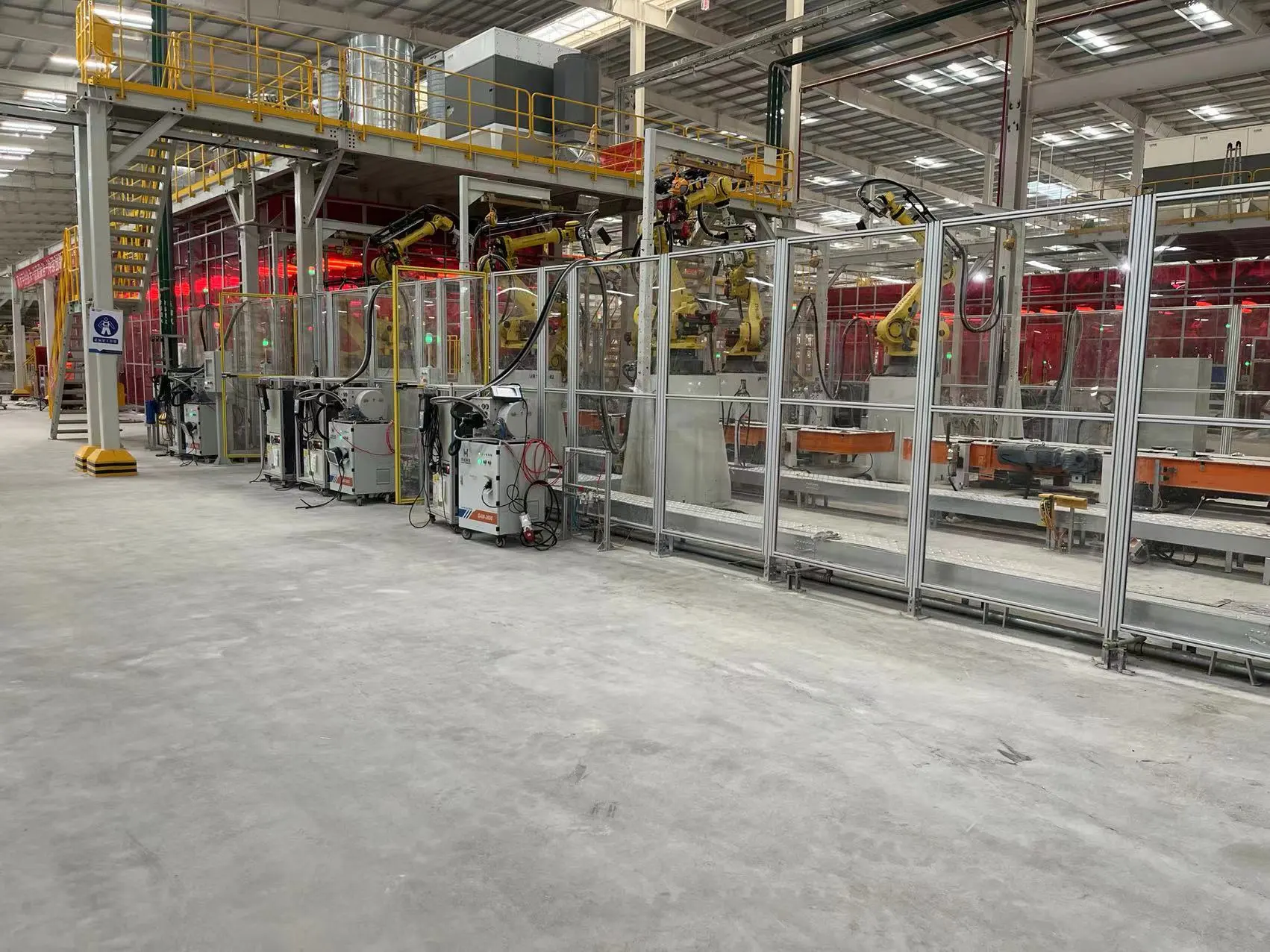
The modular aluminum-profile safety fencing creates clearly defined physical boundaries around robotic equipment and automated production areas, separating the operating areas from the surrounding workshop space.
Transparent panels are used throughout the fence structure, allowing robotic equipment and production areas to remain visible from outside the fenced zones while maintaining a physical barrier around the equipment.
The safety fence uses modular aluminum-profile frames and transparent panels that can be arranged into different sections according to the production equipment layout, including access doors and extended perimeter sections.
