Outdoor Grid-Forming Microgrid Systems

Power beyond the grid

Factory-integrated microgrid systems combine solar, wind, and battery storage for remote and weak-grid applications. Grid-forming control establishes voltage and frequency for islanded operation. Systems can be configured from single-container installations to multi-unit plants, depending on project requirements.

VSG GRID-FORMING CONTROL <8 ms TRANSFER ON APPLICABLE SYSTEMS IP54 CONFIGURATION AVAILABLE*
System topology / island mode Grid-forming
UTILITY GRID OPTIONAL PV ARRAY WIND V-AXIS BESS LFP VSG CONTROLLER GRID- FORMING 230/400 V · 50/60 Hz BLACK-START READY LOAD BUS Pump jacks 5G towers Camp / village UNIT 2 UNIT n MULTI-UNIT PARALLEL
PVWINDBESS
VSG CONTROLLER GRID-FORMING 230/400 V · 50/60 Hz · black-start
LOAD BUS · <8 MS · ZERO INTERRUPTION
<8 ms GRID-TO-ISLAND TRANSFER* · GRID-FORMING OFF-GRID OPERATION · LOW-TEMPERATURE CONFIGURATION AVAILABLE*
<8ms
GRID-TO-ISLAND TRANSFER
10kV
PROJECT CONFIGURATION AVAILABLE
−40°C
LOW-TEMPERATURE CONFIGURATION
60%
SHORTER ON-SITE CONSTRUCTION TIME
The range

Five systems. One grid-forming core.


All five systems are built around the same Virtual Synchronous Generator (VSG) controller, ensuring consistent operation across configurations — from a 30 kW standalone site to a multi-unit power plant.

With unified wiring architecture, standardized spare parts and a shared cloud platform, you can choose the energy mix that best matches your site's actual resources — not simply what your supplier has in stock.

01 / OUTDOOR PLATFORM Wind + Solar + Storage

Solar-Wind-Storage Grid-Forming Plant
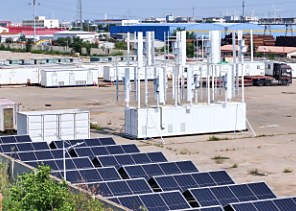
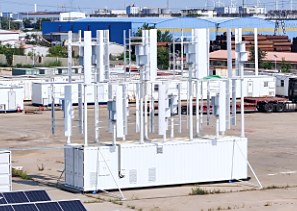
Containerised wind-solar-storage plant with vertical-axis turbines and a PV array

Photovoltaic, wind and battery storage are integrated into a single containerised plant, managed by the VSG controller. Group control enables multiple units to operate in parallel with coordinated power sharing. Available in a fixed container configuration or a trailer-mounted mobile configuration for deployment across different sites.

  • EnergyPV + vertical-axis wind + LFP storage
  • ParallelMulti-unit parallel operation with coordinated power sharing
  • EnclosureStandard ISO container · Fixed or trailer-mounted mobile configuration
  • Envelope−40 °C · salt spray · sandstorm
Contiguous oilfieldsTelecom hubs Construction campsOff-grid villages
02 / OUTDOOR PLATFORM Solar + Storage

Lean solar microgrid

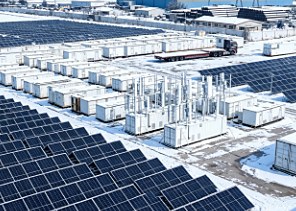
Solar-plus-storage microgrid containers on a photovoltaic field

A solar-and-storage-only configuration eliminates the need for wind turbines, simplifying system architecture and reducing turbine-related maintenance. With PV generation and LFP battery storage managed by the VSG controller, the system provides grid-forming and island-mode operation for sites with strong solar resources and limited wind availability.

  • ArchitecturePV array + LFP battery bank + VSG inverter
  • TransferGrid-to-island transfer: <8 ms
  • FootprintCompact footprint · Single-container deployment
  • O&MNo wind-turbine maintenance
High-solar / low-wind sitesMountain telecom base stations Remote security installationsLegacy site retrofits
03 / OUTDOOR PLATFORM Wind + Storage

Wind + Storage Microgrid for Low-Solar Sites

Wind-plus-storage microgrid unit with vertical-axis turbines

A vertical-axis, low-noise wind turbine works alongside LFP battery storage to provide an additional source of renewable energy when solar generation is limited. By harnessing available wind resources, the system can support power generation at night and during overcast conditions, helping reduce reliance on solar generation alone.

  • EnergyVertical-axis wind + LFP battery storage
  • RechargeDay-and-night wind generation, subject to wind availability
  • SitingHigh-altitude · Gobi · Low-solar, windy sites
  • ColdCold-climate well pads and northern sites
High-altitude remote stationsGobi & steppe installations Cold-climate oilfield sitesWinter-critical power loads
04 / EXPANSION UNIT FLEXIBLE PLATFORM EXPANSION

Power Expansion Cabinet

Power auxiliary cabinet for PV and wind expansion

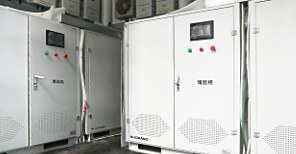
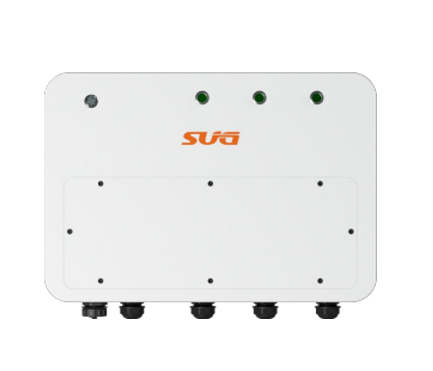
A modular power expansion cabinet designed to add PV and wind energy inputs to compatible microgrid platforms. It enables phased system expansion as energy demand grows, helping upgrade existing installations without replacing the entire power plant.

  • CompatibleCompatible with Platforms 01, 02 & 03
  • INPUTSPV strings · Wind turbine input
  • CONTROLAdditional MPPT capability
  • EXPANSIONPhased capacity expansion
Phased projectsRenewable resource upgrades Capacity expansionSeasonal load growth
05 / Residential Villa & residence

Villa Solar and Energy Storage

A complete solar and energy storage solution for villas, combining an off-grid hybrid inverter, an LFP battery system, and an SOC power manager. The inverter range includes EU single-phase, US 120 V, and 120/240 V split-phase models. Battery options include low-voltage 48 V and 51.2 V systems, as well as 102.4 V high-voltage systems. System capacity and load coverage depend on the selected models and configuration.

UN38.3MSDSCE RoHSFCC
PV ARRAY UTILITY LFP BANK HYBRID INVERTER 1–12 kW MPPT + UPS BYPASS PURE SINE SOC POWER MANAGER ROUTE 1 · DEFERRABLE shed at 40% SOC ROUTE 2 · COMFORT shed at 20% SOC ROUTE 3 · PRIORITY shed at 10% SOC RESTORE 60 / 40 / 30% 10 kW TOTAL · IP65
PV ARRAYUTILITY
HYBRID INVERTER1–12 kW · MPPT + UPS bypass
LFP BATTERY BANK4.8–61.44 kWh · 120 / 230 V
SOC POWER MANAGER3 load routes · 10 kW · IP65
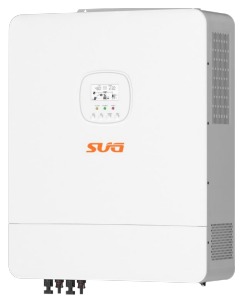
Off-grid hybrid inverter, wall mounted, 1 to 12 kW
Inverter

Off-grid hybrid inverter

Combines PV and AC input, battery charging and discharging, and inverter output, with UPS bypass. Available in EU single-phase, US 120 V, and 120/240 V split-phase models.

  • EU models: 1, 1.5, 3, 4, 6.2, and 11 kW
  • 4 / 6.2 / 11 kW EU · 3.6–6.5 kW US · 12 kW split-phase
  • US models: 3.6, 5, and 6.5 kW
  • Split-phase model: 12 kW
  • Pure sine-wave output
  • Switching time: 10 ms for computer equipment; 20 ms for household appliances*
  • MPPT efficiency: up to 99.9%*
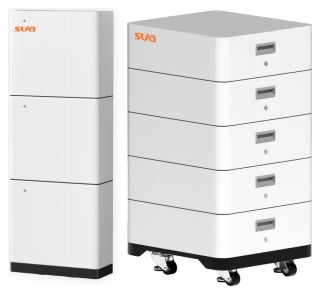
Stacked LFP home battery modules
Storage

LFP battery bank

Battery options include wall-mounted, rack-mounted, and stacked designs. Choose from 48 V, 51.2 V, and 102.4 V systems, with capacities and expansion limits that vary by model.

  • Low-voltage models: 48 V or 51.2 V; capacities from 4.8 kWh to 32.15 kWh across the listed battery series*
  • High-voltage models: 102.4 V; listed capacities from 10.24 kWh to 61.44 kWh*
  • Selected low-voltage series support up to 15 battery units in parallel*
  • High-voltage stack configurations vary by series and model*
  • Cycle life: more than 6,000 cycles at 80% DoD*
  • Warranty: 5 years*
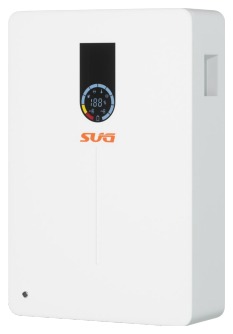
All-in-one home energy storage cabinet, 5 to 6 kW
All-in-one

Stacked energy storage system

Combines a 5.5 kW or 10 kW off-grid inverter with 51.2 V, 100 Ah LFP battery modules. The modular design allows the system capacity to be configured for different applications.

  • Battery capacity: 5.12 kWh per module
  • Stacking and parallel limits depend on the selected configuration*
  • Pure sine-wave output
  • Switching time: 10 ms for computer equipment; 20 ms for household appliances*
SOC power manager, wall-mounted load control box with three load routes
Control

SOC power manager

Manages three AC load routes according to battery state of charge (SOC), switching loads off and reconnecting them at configurable SOC thresholds.

  • Three load routes
  • Default cut-off SOC: 40% / 20% / 10%
  • Default reconnection SOC: 60% / 40% / 30%
  • Configurable SOC range: 0–99%
  • Output voltage: 220 V AC ±3%
  • IP65 protection
  • CAN communication; Bluetooth/Wi-Fi optional or subject to confirmation*
Configuration
Hardware
Product information
EssentialSmall villa
5.5 kW off-grid inverter + 5.12 kWh battery module
51.2 V, 100 Ah LFP module. Confirm inverter and battery compatibility for the selected system.
FamilyDetached villa
6.2 kW off-grid inverter + selected low-voltage battery system
Battery capacities and expansion limits vary by battery series and model.
EstateLarge villa
12 kW split-phase inverter + selected battery system
120/240 V split-phase output. Confirm battery voltage, capacity, and system compatibility for the selected configuration.
The difference that matters

Grid-forming and grid-following systems
Why the distinction matters

Grid-following inverters synchronize with an existing grid and typically require a stable voltage and frequency reference. Grid-forming inverters can establish and regulate voltage and frequency within a designed system, enabling operation in islanded or off-grid conditions when the system is configured for it. For remote sites, this capability can support operation without a utility grid.

Grid-forming microgrid compared with grid-following storage across six dimensions
Dimension Grid-forming system Grid-following system
Grid reference Can establish a voltage and frequency reference in a designed islanded system Synchronizes with an existing grid or another grid-forming source
Weak-grid operation May support operation in weak grids, depending on controls and system design Performance depends on grid strength and inverter controls
Black start Can support black start when the inverter, battery, controls, and protection are designed for it Usually requires an external voltage and frequency reference to start
Parallel operation Multiple units can operate in parallel when supported by system controls and commissioning Parallel operation depends on the inverter and plant control design
Typical applications Microgrids, remote sites, and systems requiring islanded operation Grid-connected solar and storage systems
Harsh environments Enclosure and environmental options depend on the selected equipment Enclosure and environmental options depend on the selected equipment
Capabilities

Capabilities for remote and critical-power sites

01

24- Power from multiple energy sources

Solar, wind, and other compatible sources can work together with battery storage to support power availability beyond daylight hours. Actual operating time depends on system sizing, weather, and load demand.

02

Fast transfer to island mode

When the grid fails, the system can transition to islanded operation. Transfer time depends on the inverter model and system configuration.*

03

Peak shaving and energy management

Where grid connection is available, the system can charge during lower-cost periods and discharge during peak demand, subject to local tariffs and system settings.

04

Remote monitoring and support

Monitor system status, battery state of charge, and fault information remotely, subject to the communication setup and available network connection.

05

Options for demanding environments

Enclosure, corrosion protection, temperature range, and hazardous-area suitability depend on the selected equipment and configuration. Confirm required ratings and certifications for each project.

06

Factory integration can reduce site work

Pre-integrated controls, storage, and power equipment can reduce on-site installation work. Actual savings depend on project scope, site conditions, and the level of factory integration.

Applications

Power where the grid falls short

From remote energy sites to homes and community microgrids, our systems combine solar, wind, battery storage, and grid-forming technology to meet different power needs. Each system is configured around the site, available energy sources, and load requirements.

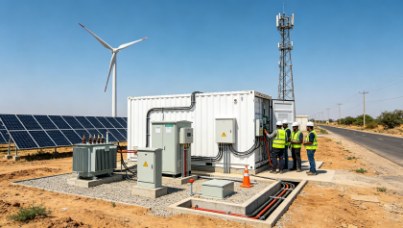
Containerised microgrid at a remote desert site with solar and wind Oil & gas

OIL & GAS

Support remote operations with a grid-forming power system designed around site loads and available energy sources. Project-specific HSE and environmental options can be evaluated during system design.

Scope:site assessment · load analysis · system configuration · commissioning
Microgrid container on a highway construction site Infrastructure

Construction and remote camps

Keep temporary and remote sites powered with systems configured for camp loads and project requirements. Modular options can support relocation and future capacity planning.

Scope:mobile configurations · camp power distribution · relocation planning
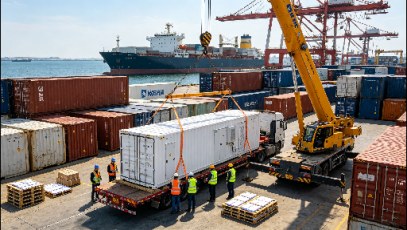
Microgrid container being loaded at a port for export Telecom

Telecom towers and remote sites

Configure power for telecom sites beyond the utility network, with options for remote monitoring and system status reporting, depending on the selected equipment and communications setup.

Scope:site assessment · DC/AC configuration · remote monitoring options
Communities

Off-grid villages and islands

Plan community-scale power around projected demand, local distribution needs, and available renewable resources. System capacity can be designed with future expansion in mind.

Scope:demand assessment · microgrid design · operator training
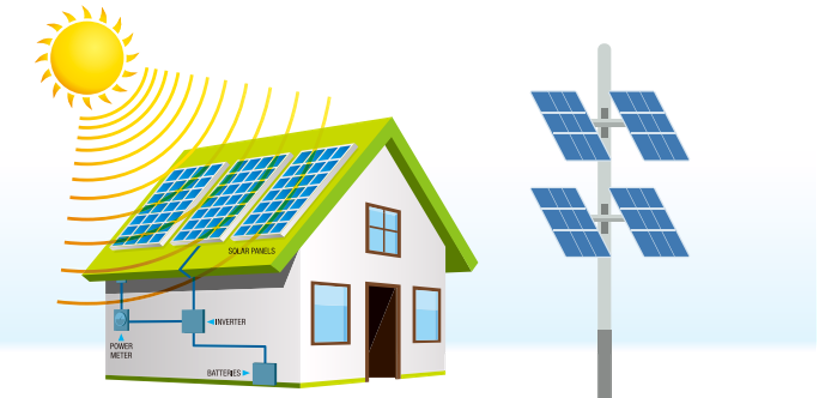
Villa with rooftop solar array, pole-mounted PV and battery backup Residential

Villa and home backup

Combine solar, battery storage, and an inverter to support selected household loads during an outage. An SOC power manager can prioritize load circuits as battery charge falls, depending on system configuration.

Scope:system sizing · installation planning · support options

A different application?

Tell us about your site, location, and load profile. We’ll review your requirements and recommend a suitable system configuration.

Global delivery

Configured for local conditions

Voltage, frequency, environmental protection, and language can be configured for the project. This helps make equipment supply and deployment more repeatable across markets.

  • 110 V single-phase, 220 V residential, 380 V industrial, and 10 kV systems, subject to product configuration
  • low-temperature, dust and sand, and coastal salt-spray protection, depending on the selected configuration
  • local certification, communication protocols, and operator-language requirements
  • export documentation, container shipping, and multimodal freight options
TELL US ABOUT YOUR MARKET
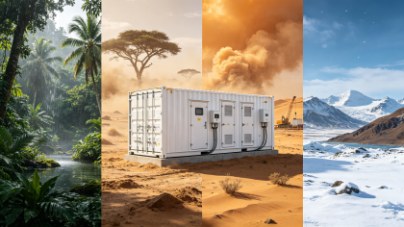
The same containerised microgrid unit shown across tropical, desert, dust-storm and arctic conditions
TropicalHumidity & monsoon conditions
DesertSand & high ambient temperatures
Dust stormParticulate protection
ArcticLow-temperature configuration, down to −40°C*
In-house

Integrated manufacturingCell sorting, module PACK, cabinet integration, and high-voltage testing are carried out on the company’s own production lines.

Certified

Management systems and product marksISO 9001, ISO 14001, and ISO 45001 management-system certifications. Product certifications and documents, including CE, RoHS, ETL, FCC, PSE, UN38.3, and MSDS, vary by model.

Engineered

22+ patentsOne invention patent, six software copyrights, eleven utility-model patents, and four additional patents with a second-inventor contribution.

Proven

Field experienceDeployed in oilfields, telecom tower sites, and highway construction projects, with experience in sandy, cold, and coastal environments.

Working with us

Four ways to work with us
One engineering team behind every project

Whether you are a distributor expanding your product range, an EPC contractor delivering a power project, or an operator managing a remote site, we can tailor the equipment, project scope, and support to your requirements.

01

Equipment supply & export

Choose from standard or configured systems, with product documentation and export support. Container loading and shipping options are arranged according to the order and destination.

02

Equipment and EPC

Project support can include site assessment, load analysis, system design, equipment delivery, installation, and commissioning, depending on the agreed project scope.

03

Equipment + O&M

Support options can include scheduled remote checks, fault diagnosis, on-site service, and control-system updates. Local team training can be arranged where required.

04

Project co-investment

For investors and project operators exploring joint developments, investment and commercial arrangements can be discussed and agreed for each project.

Support 01

International customisationEquipment can be configured for local voltage, frequency, environmental conditions, communication protocols, language, and labelling requirements, subject to the selected model and market requirements.

Support 02

Tender and bid documentationAvailable documentation may include product test reports, qualification documents, patent information, project references, drawings, and energy or cost analyses, as applicable.

Support 03

Delivery and export supportExport support can include stock coordination, consolidated loading, sea, road, or air freight options, and shipment coordination, depending on the order and destination.

Support 04

Technical supportRemote technical guidance is available for system operation and troubleshooting. English- and Chinese-language support, commissioning assistance, and on-site training can be arranged according to project requirements.

Questions buyers ask

Straight answers.

What does "grid-forming" actually change for my site?
A grid-forming system can establish and regulate voltage and frequency, enabling a suitably configured system to operate in island mode when utility power is unavailable.
Can the system operate without the grid and restart after a shutdown?
The system can support off-grid operation and black start when paired with compatible generation, battery storage, controls, and protection. Restart capability and operating sequence depend on the system configuration.
How fast is the grid-to-island transfer?
Applicable grid-forming systems support grid-to-island transfer in under 8 ms. Transfer time and load performance depend on the selected model and system configuration.
Which voltages and certifications are available?
Voltage options include 110 V single-phase, 220 V residential, 380 V industrial, and 10 kV systems, depending on the selected configuration. Certifications and documentation vary by model and market; available options include UN38.3, MSDS, CE, RoHS, FCC, and ISO management-system certificates.
Can we start small and expand later?
Expansion options depend on the selected system. Compatible configurations can support additional PV or wind inputs, battery capacity, or parallel units as demand grows. The required equipment and system design should be assessed for each expansion.
What is installed on site, and what arrives pre-integrated?
Depending on the project scope, controls, storage, power conversion, thermal management, and distribution equipment can be pre-integrated and tested before delivery. On-site work may include equipment placement, cable connections, and commissioning. Installation time and labor requirements vary by site and system design.
How is the system shipped and supported after delivery?
Shipping options may include sea, road, or air freight, depending on the destination and delivery requirements. Remote monitoring and diagnostics are available with compatible equipment and network access. Warranty, spare parts, and on-site training are agreed for each project. Manuals and interface labels can be provided in the required language.
Next step

Send us the load.
We will send back a configuration.

Give us the site, the load and the country. You get a sized system, a bill of materials and delivered pricing — usually within two working days.

  • Sizing and yield modelling included, no charge
  • Drawings and datasheets for your tender file
  • Sample units and factory visit welcome
STEP 01You send the site, load and country
STEP 02We size the system and the storage
STEP 03You get the BOM and a delivered price

CONTACT US

Whether you need custom products, a price quote, or more details, contact us today! Our team is available 24/7 to reply.
Full Name *
E-mail *
Your quote and catalog will be sent to this address — usually within 24 hours. No newsletters, no spam.
WhatsApp / Mobile (optional) *
We only use it to reply to your inquiry — no spam calls. We usually reply within 24 hours on WhatsApp.
Message *
A rough idea or a full spec — share what you have, our engineers will take it from there.
We use Cookie to improve your online experience. By continuing browsing this website, we assume you agree our use of Cookie.